Grass Cutting in Burwell

The Verges

The benefits of mowing the grass verges in Burwell less often

Wildlife in the UK is declining. Once common animals and plants are getting rarer - and Cambridgeshire is one of the most nature-depleted areas in England.

Sir David Attenborough has stated that wildlife parks and nature reserves are not enough to halt the decline in nature: “The whole countryside should be available for wildlife. The suburban garden, roadside verges ... all must be used”.

Burwell Parish Council is working to support our local wildlife by having the roadside verges mown a bit less often.

Every small step we can take to halt the decline in nature matters.

Mowing less often leads to a greater abundance of wildflowers - they can bloom and set seed.

  • More wildflowers means more nectar and pollen for pollinators like bees, butterflies, and hoverflies. Studies show up to five times more flower-visiting insects in less-mowed areas.
  • Wildflowers are great to look at! Most people walk or drive past verges more often than they go to nature reserves, so verges full of flowers and insects provide easy access to nature.
  • Passing common wildflowers and insects daily on the way to school or the shops provides opportunities to notice and learn about our local wildlife.
  • Seeds can lie dormant in the soil for years: amazing local flowers can make a come-back if we give them a chance to bloom and set seed.
Longer grass offers shelter and nesting sites for insects such as beetles, spiders, grasshoppers, and the caterpillars of butterflies and moths.
  • More insects means more essential food for birds, hedgehogs, and other wildlife.
  • Insects are fascinating - who can resist a bright butterfly, a fuzzy bee or a shiny ladybird?

Reduced mowing helps support soil health by improving aeration and carbon storage (longer roots take carbon deeper into the soil).
  • There’s also less fuel needed for mowers, and less noise pollution from petrol-powered equipment.
  • Longer grass dries out less easily in hot and dry weather, remaining green instead of turning brown and unsightly.

Some facts and figures about nature in the UK

In the UK, The State of Nature report 2023 confirmed that wildlife is continuing to decline. Already classified as one of the world’s most nature-depleted countries, nearly one in six of the more than ten thousand species assessed (16%) are at risk of extinction in the UK.

In England, wildlife has declined in abundance by 32% on average since 1970. Plant species in particular have decreased in distribution by 68%. Common English bird species have declined on average by 16%, and within this group farmland birds have suffered particularly strong declines of on average 59%.

In 2023, Buglife reported a staggering 78% decrease in the number of insects sampled on UK vehicle number plates between 2004 and 2023. These findings are consistent with research which has widely reported declining trends in insect populations globally.

80% of butterfly species in the UK have declined in either abundance or distribution, or both, since 1976. Since 1971, over two thirds of larger moths have declined.

Intensive management of agricultural land, climate change and habitat loss are the main factors causing these shocking declines.

Around 97% of wildflower meadows have been lost in the UK since the 1930s.


Other Wildflower Areas in Burwell

At the Council meeting on Tuesday 9th March 2021 Burwell Parish Council has agreed to run a pilot scheme during 2021 on a few areas of grass verge to encourage the growth of wildflowers. We originally opted for two areas for the Pilot Scheme. The first is the triangle of grass at the bottom of Hall Lane where the road goes into Park Road (see below) and the other was at the top of Bolton Close. In 2022 we have continued to manage the area at the bottom of Hall Lane but have returned to cutting the grass at the top of Bolton Close. 


We have also areas at the Recreation which have been left to flourish as wildflower areas and a strip of grass to the rear of the Cemetery has also been left.


One of the main problems with allowing areas to be managed to encourage wildflowers is the disposable of the grass arisings once the areas are cut in late summer. At this point in time the Council does not have the facility/hours to remove all the arisings. We are however looking at any options that we are made aware of.

2022 Wildflowers on Pound Hill

Some Parishioners do prefer to see neatly mown grass on the verges and green areas of Burwell.  However, in recent years, more and more local people are calling for the Parish Council to allow green areas to grow and flower, producing a source of food for our bees and other pollinators, and acting as a carbon sink (see below).  

Our wildflowers pilot scheme in 2021 was met with a lot of approval, and the Council had a lot of positive feedback about the buttercups on Pound Hill. This year an area is being left uncut again on Pound Hill to encourage biodiversity and wildlife.

The benefits to the bees and other pollinating insects is obvious, but by allowing plants and grasses to grow, this area is also providing a carbon sink. See below for further information on grasslands as carbon sinks
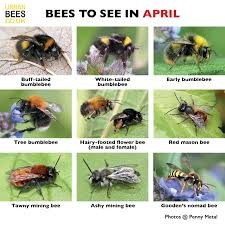
  

About the decline of pollinators

https://www.rhs.org.uk/wildlife/pollinators-decline-in-numbers

https://ento.psu.edu/research/centers/pollinators/resources-and-outreach/disappearing-pollinators

https://www.europarl.europa.eu/news/en/headlines/society/20191129STO67758/what-s-behind-the-decline-in-bees-and-other-pollinators-infographic

GRASSLANDS AS CARBON SINKS

While the principal reason for much less frequent mowing of roadside verges and other areas of grassland is to enhance biodiversity at a time when nature is under threat, grasslands also act as carbon sinks by storing carbohydrates formed from atmospheric carbon dioxide by photosynthesis. There are three main storage routes.

PLANT STRUCTURE

Plants store the carbohydrate products, sugars, and starches, formed from photosynthesis, in leaves, stems, roots, seeds and fruits. Broad-leaved grassland plants like dandelions have tap roots to store carbohydrate underground. Less frequent mowing should allow plants with tap roots to store more carbohydrate in their roots because their leaves have a chance to grow and capture more carbon dioxide than if the grassland was mown frequently

SOIL BACTERIA AND PLANT SPECIES OF THE PEA FAMILY

Plant species of the pea family obtain the essential nutrient of nitrogen in exchange for carbon through a symbiotic relationship with rhizobia bacteria. Rhizobia can convert nitrogen gas in the air and in spaces between grains of soil into ammonium, a form in which nitrogen can be absorbed as a nutrient by plant species of the pea family. Rhizobia attach to the roots of the plants, forming colonies in the shape of nodules. In exchange for ammonium rhizobia absorb carbohydrates from plant roots, thus fixing carbon in the soil.

Two species of the pea family, white clover and black medick, are abundant locally in grassland. Two other species of the pea family, red clover and birdsfoot trefoil, are common in local grasslands.

PLANTS AND FUNGAL MYCORRHIZZA

Most plant species that are herbaceous perennials also form symbiotic relationships with fungal mycorrhiza. Plant roots link with underground mycorrhiza systems. The mycorrhiza provides plants with essential nutrients, including nitrogen and phosphates, in exchange for carbohydrate from plant roots, thus fixing carbon in the soil. Mycorrhizal systems allow plants to forage for essential soil nutrients over a wider area than their root areas. This can be important for the absorption of phosphate, which can be in short supply in some soils.

CONCLUSION

These are three ways in which grasslands act as carbon sinks. Some of the carbohydrate in the soil will be used by soil organisms, converted back to carbon dioxide, and stored in the soil.

References

J H Langenheim and K V Thimann ; Botany

R G S Bidwell ; Plant Physiology

Brian Spooner & Peter Roberts ; Fungi

Penguin Dictionary of Botany

Plantlife website